
Exposure and dynamic range
Exposure sets how much light forms each frame. Three controls trade against each other: exposure time, gain, and aperture.
Exposure time and motion blur
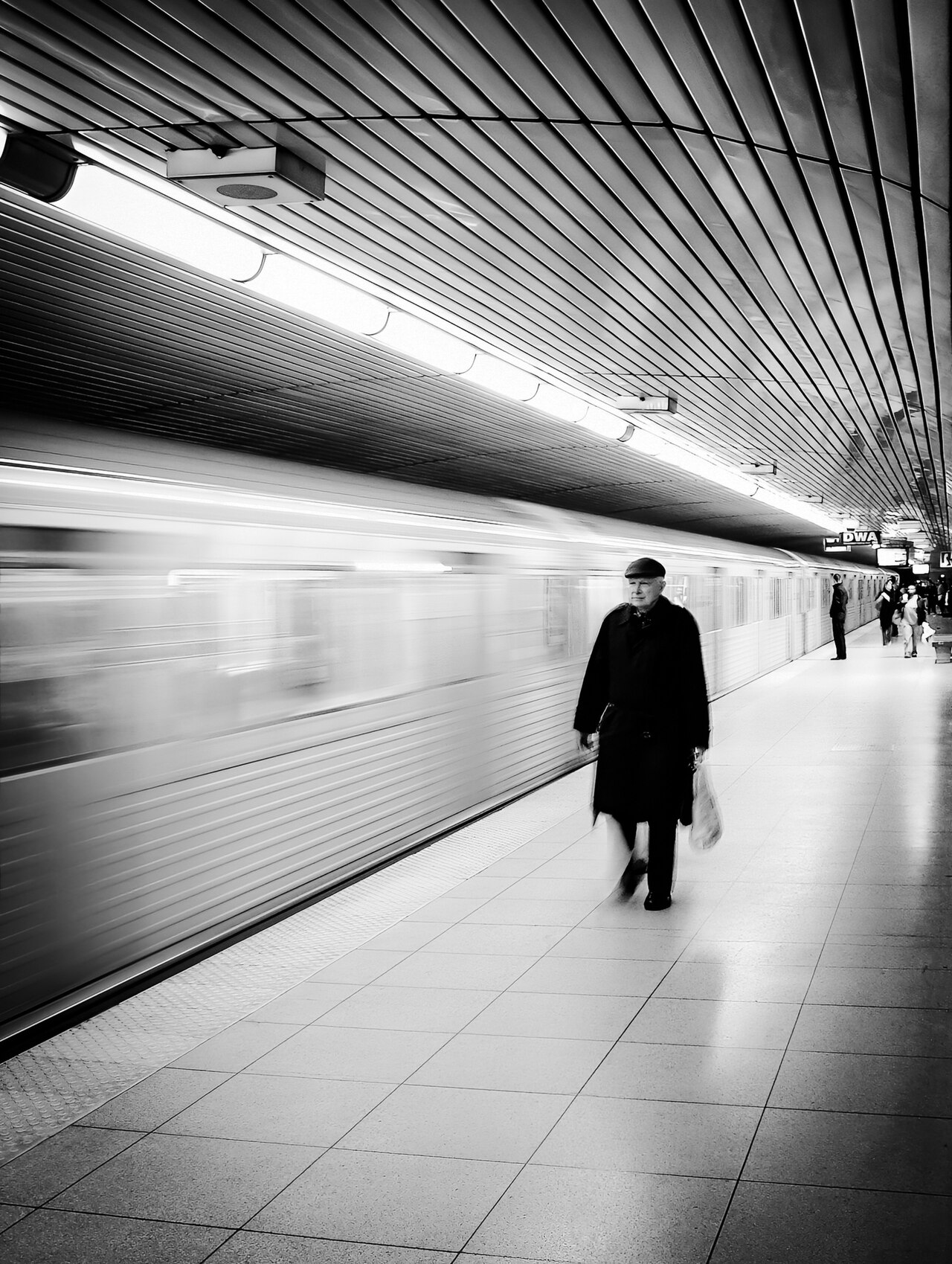
Exposure time (shutter speed) is how long each pixel integrates light. Longer exposure means brighter and less noisy, but moving generates smears. Blur length scales with exposure time times the apparent angular rate of the scene, so a fast robot or a fast object forces a short exposure.
A short exposure collects fewer photons, which lowers signal-to-noise and forces gain up. Autonomy applications that involve motion require short exposure times, which can lead to increased noise that is typically acceptable.

Gain and noise
Gain (ISO) amplifies the signal after readout. High gain delivers brightness at short exposures but amplifies noise with it. The dynamic range is unchanged. Autonomy applications typically keep gain as low as the exposure budget allows, then accept noise rather than blur.


Auto-exposure and its failure modes
Auto-exposure (AE) picks exposure and gain to hit a target image brightness. The failure modes matter for autonomy:
- Hunting: AE oscillates when lighting changes quickly, for example driving through dappled shade, so brightness and effective frame timing wobble.
- Saturation in high-contrast scenes: metering for the average blows out the sky or crushes a shadowed underpass, exactly where you need detail.
- Latency: AE reacts over several frames, so a tunnel entrance or exit leaves a stretch of unusable frames.
For perception that feeds localization, fixing or constraining exposure and metering on the region that matters often beats default AE. There is published work on tuning auto-exposure specifically for robot localization in hard light.
High dynamic range
Driving scenes span a huge brightness range: direct sun, headlights, and deep shadow can coexist in one frame. A standard sensor cannot handle the extremes. Two high dynamic range approaches widen the range:
- Multi-exposure HDR: capture several exposures and merge them. Simple, but moving content ghosts because the exposures are not simultaneous.
- Single-shot dual-gain readout: read each pixel through a high-gain and a low-gain path and combine them in one capture, which avoids motion ghosting. Automotive HDR sensors such as the Sony IMX490 use this approach.