
Common camera problems
The following artifacts arise when cameras operate on moving platforms and in uncontrolled lighting.
Rolling-shutter skew and wobble
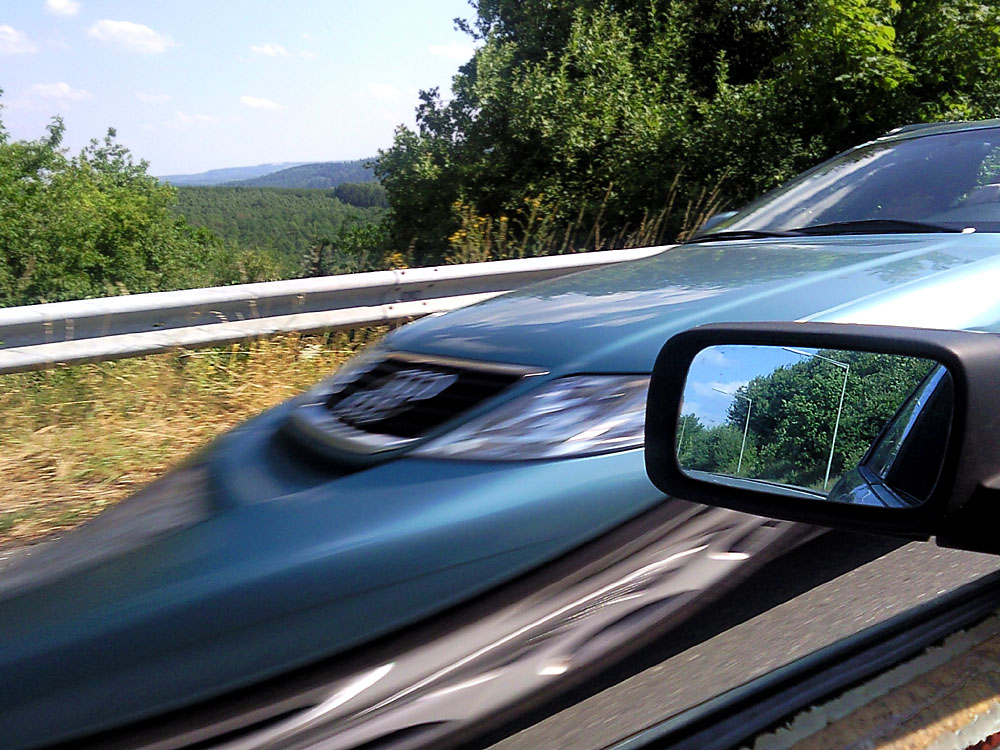
A rolling shutter exposes the sensor row by row, so a fast pan causes vertical edges to lean (skew) and vibration shears the frame (wobble, or jello). It also corrupts geometry: feature positions are sampled at different times down the frame, which biases visual odometry and stereo.

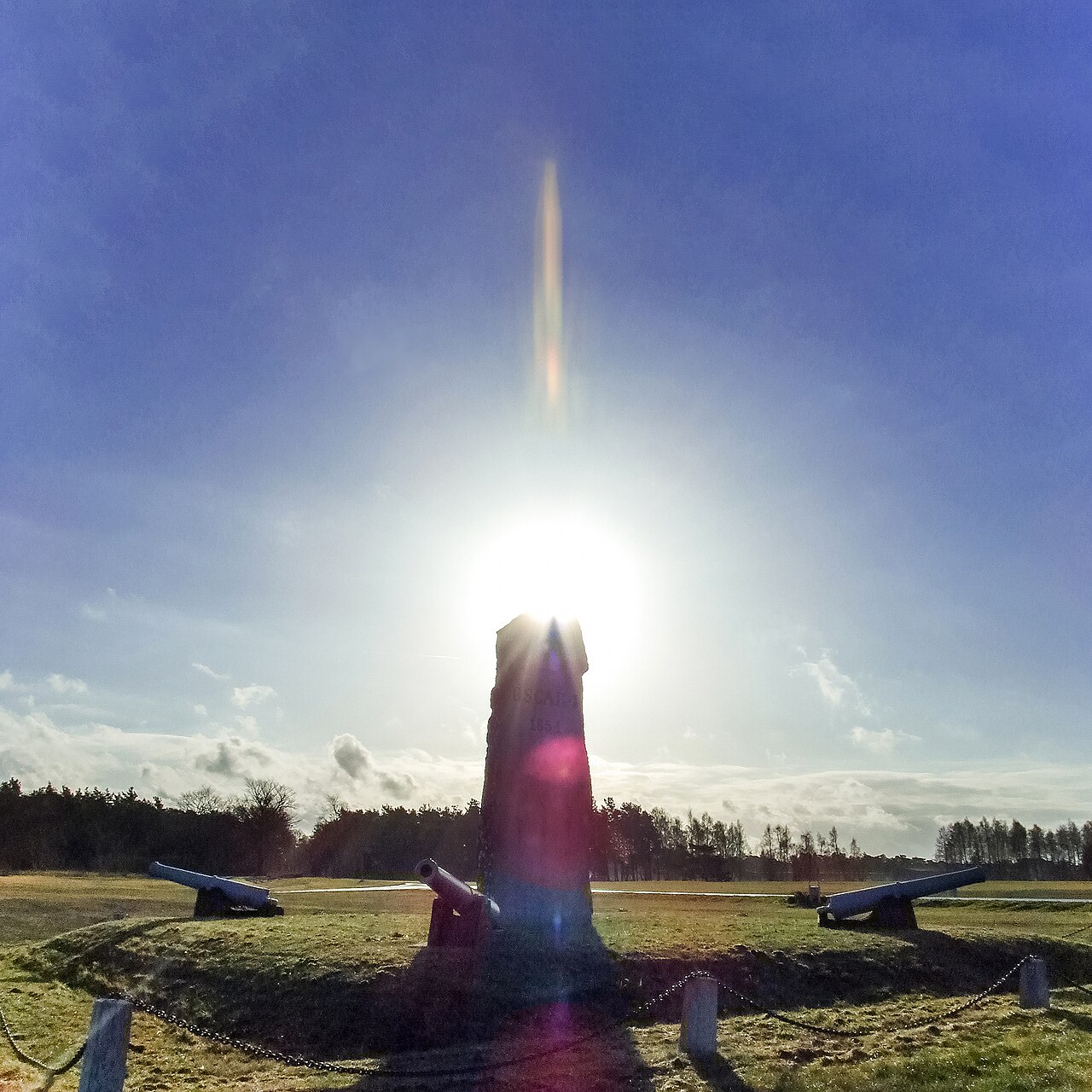
Lens flare and veiling glare
Bright sources such as the sun or headlights scatter inside the lens, producing flare artifacts and a low-contrast haze (veiling glare) across the frame. Contrast falls when the camera points toward a low sun. Flare is fundamentally an optical phenomenon rather than a property of the sensor.

Chromatic aberration
The lens focuses different wavelengths at slightly different points, leaving color fringes on high-contrast edges. The effect is worst at the frame periphery and on wide lenses.

Vignetting
The frame is darker toward the corners, caused by optical falloff and the lens aperture. It biases photometric methods and any algorithm that assumes uniform brightness across the frame.
Bloom and saturation
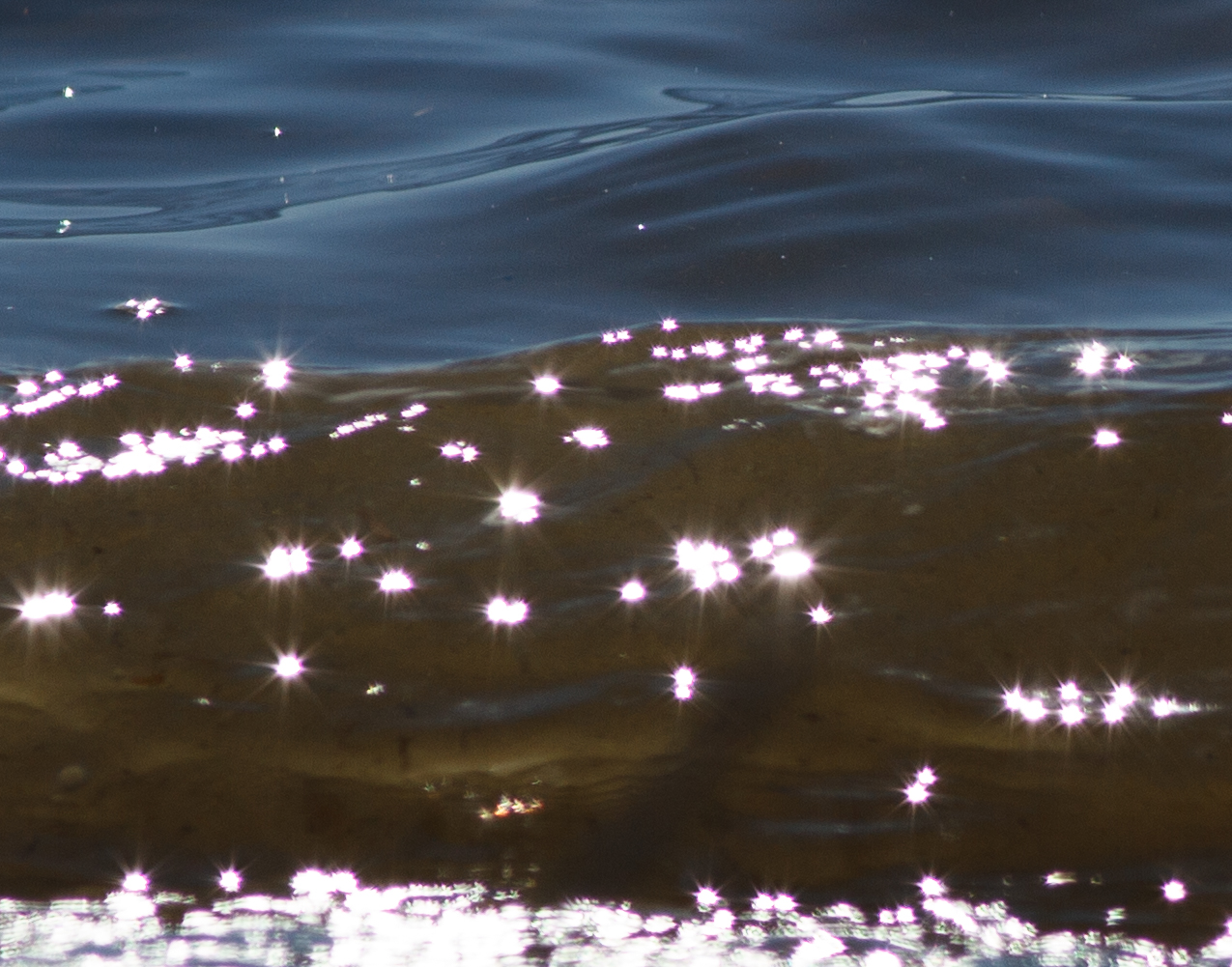
A strong return or a direct light source saturates pixels and bleeds charge into neighboring pixels (bloom), smearing bright regions. Retroreflectors and the sun are common causes. Beyond saturation a pixel carries no further information.
Auto-exposure hunting
Auto-exposure reacts over several frames, so rapidly changing light, such as dappled shade or the mouth of a tunnel, causes brightness to oscillate and leaves a sequence of over- or under-exposed frames at each transition.
Thermal focus drift
Temperature changes alter lens and mount dimensions, shifting focus and slightly changing the intrinsics. Outdoor and engine-bay cameras drift between a cold start and steady-state operation. A calibration captured at one temperature does not hold across a wide temperature range.
Depth-specific failures
- Textureless stereo dropouts: passive stereo returns gaps on blank walls, sky, and smooth floors, where no disparity can be computed.
- Structured-light sunlight washout: the projected pattern is overwhelmed by sunlight, so structured light degrades outdoors.
- iToF multipath and flying pixels: indirect time-of-flight biases range in concave geometry (multipath) and produces points that float between foreground and background at depth discontinuities (flying pixels). See Depth.